Avant-Garde literally means Advanced Guard. It was a time of innovative and experimental new art forms, such as pop art or abstract expressionism, that took place from the 1860s all the way up to the 1960s. These forms of art were very unorthodox and rather daring.
 |
| Bertolt Brecht |
 |
| Augusto Boal |
One such art form was referred to as "Experimental Theatre." This was the stage performance side of Avant-Garde. But unlike traditional theatre, these plays usually involved the audience in some way, shape, or form. From bringing audience members up on stage to screaming directly in there faces, these "Experimental Theatre" pieces got the audience in on the action. Two major figures of said theatre, were play-writes Bertolt Brecht and Augusto Boal (pictured respectively to the left and right) Both Brecht and Boal like to pose questions to the audience but wouldn't answer said questions. This got the audience thinking for themselves and interpreting the own endings.
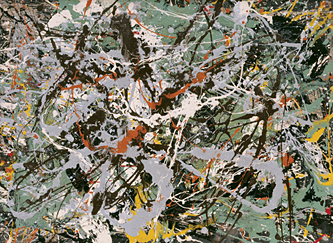 |
| A good example of Jackson Pollock's unique style. |
Another form of Avant-Garde is known as Abstract Expressionism. The phrase "Abstract Expressionism" was first coined by a German newspaper in 1919 but really started in the USA in 1946 when Robert Coates, a renowned art critic, began to use the term. This was the first purely American Avant-Garde movement to reach worldwide acclaim and put New York in the middle of the western art world. One great artist went by the name of Jackson Pollock. Pollock developed his own style of painting that had never even been thought of before. His paintings consisted of splattered paint on a blank canvas (one such panting pictured to the right). The layers upon layers of paint were sometimes inches thick.

Excellent! 100%
ReplyDeleteI like Jackson Pollock's picture. I can feel a passion and freedom from the work
ReplyDelete